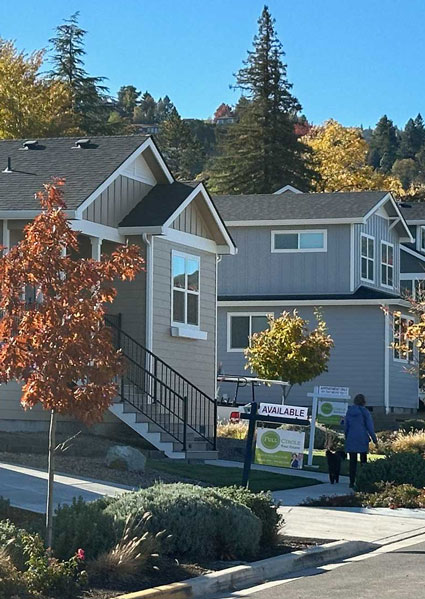
Our focus is on creating permanently affordable homeownership opportunities by retaining land as a shared community resource. Our goal is to make homeownership attainable for families who might otherwise be priced out of the market. We collaborate closely with local developers, organizations, and government partners to provide homes that stay affordable for current and future residents.
Various sources of public and philanthropic capital...


…are used by community land trusts…
...to acquire homes in a geographic focus area.
A new resident buys their house outright...

...but leases the land underneath from the CLT.
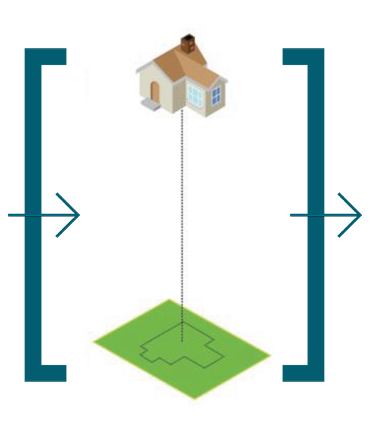
They pay an annual fee to the CLT to support its operations...
...and the CLT retains permanent ownership of the land.
Current resident sells their house at a price set by the CLT, earning a portion of the increase in value of their home...
...while the CLT retains the land.
A new resident buys the house at a price that's been kept affordable...

...and agrees to the same requirements around resale.
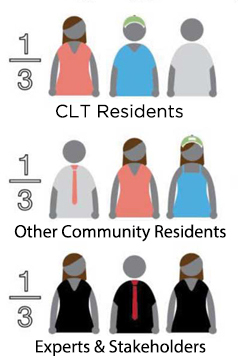
CLTs are typically governed by:

The CLT’s geographic focus allows it to not only provide affordable housing, but to play an important role in stabilizing neighborhoods.
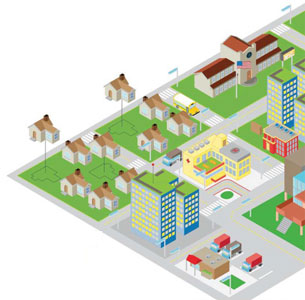
As it diversifies its portfolio, the CLT can also own land in trust for permanently affordable rental housing or community-focused commercial developments.
Original CLT Model infographic designed by Benzamin Yi
Community Stability: CLTs have increased housing stability, with a national study finding that CLT homeowners have a foreclosure rate nearly 10 times lower than the national average, providing long-term security and stability for residents.
Building Equity Over Time: CLT homeowners typically build $14,000 to $20,000 in equity over five years, providing a foundation for financial stability. CLT ownership offers an accessible path for low- to moderate-income families to grow their assets over time.
Economic Diversity: CLTs provide homes for community members who contribute to the local workforce but may not afford market-rate housing. For example, in one urban CLT, 70% of residents were essential service workers, including teachers, healthcare providers, and small business employees.
Reduced Displacement: In high-cost housing markets, CLTs have been shown to protect residents from displacement. A survey of CLTs in several states revealed that over 85% of residents stayed in their homes for over five years, avoiding the upheaval that rising housing costs can bring.
Community Control and Decision-Making: Community Land Trusts empower residents and community members to be part of land-use decisions. For instance, in Vermont, one CLT board is made up of a third of residents, a third of community members, and a third of public officials, ensuring decisions reflect community priorities and needs.